Starblast.io asks nothing before you play. Open the page and the game is already running behind a JOIN THE BATTLE button, with a live leaderboard on the side and no login wall. Click once and you are a small ship in a field of drifting asteroids, with other pilots nearby deciding whether you are worth chasing. Plenty of .io games load quickly; few feel this ready for you.
The developer, the French studio Neuronality, funds the game through advertising and says so openly on the page, and an optional Elite Commander Pass removes those adverts and adds bonus features. The core game is free and complete. What sets it apart from most of its neighbours is progression inside a match: you do not just survive longer, you become something quite different.
Gems in, upgrades out
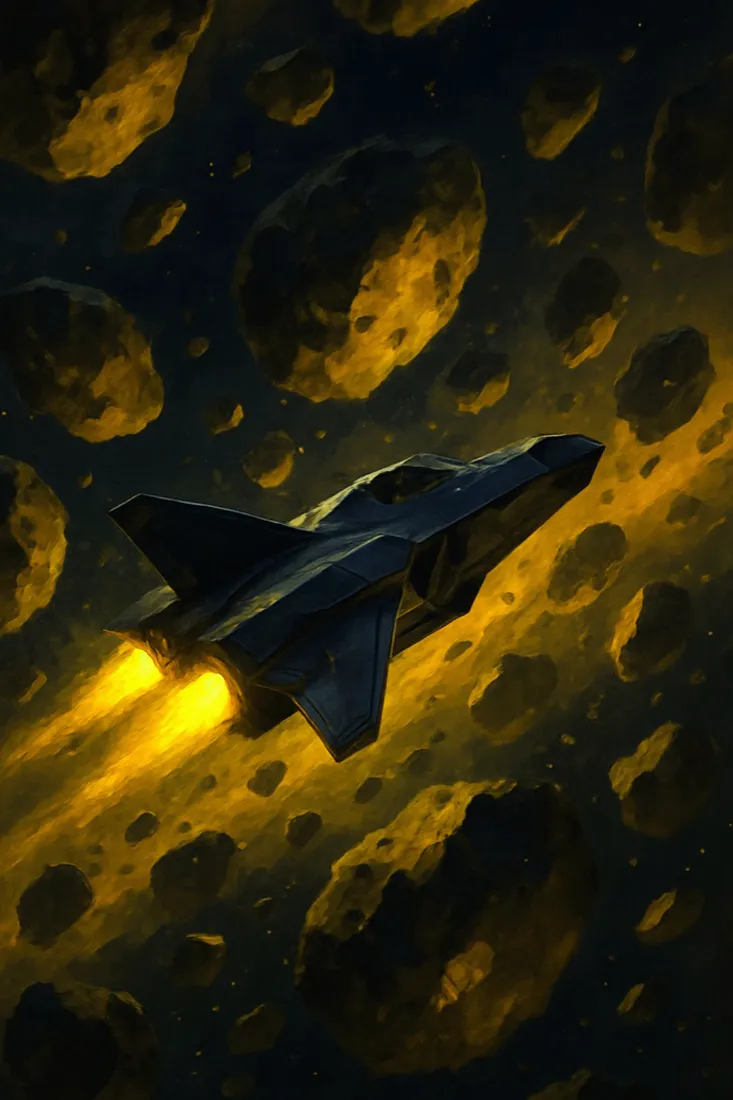
Everything starts with mining. Shoot an asteroid and it breaks apart, scattering gems you collect into your cargo hold. Those gems pay for stat upgrades across several categories, such as shield, energy and speed, and each extra level costs more than the last. You can also spend them on secondary weapons. When your cargo is full and your current ship is fully upgraded, you choose between two ships on the next tier.
That choice is the heart of the game. According to the community wiki, there are seven tiers and dozens of ships, each with its own shape, handling and weapon pattern. Some lean towards brawling, some towards speed, some towards support. You rarely know the ideal path in your first week, and part of the joy is discovering that the ungainly ship you dismissed is actually brilliant at keeping enemies at range.
Survival: every pilot for themselves
Survival mode is free-for-all. Everyone starts small, everyone mines, and the arena gradually fills with bigger ships hunting smaller ones. It produces a tense rhythm: you want to upgrade quickly, but every minute spent mining a large asteroid is a minute you are vulnerable. Learning when to break off and run is as important as learning to aim.
Deaths sting, because losing a high-tier ship means losing the progress invested in it. That gives Survival an edge the lighter games on our list lack. It is not punishing in a cruel way, since you can always start again in seconds, but it does make careful play pay off. If you enjoy the slow build and the sudden, dangerous moment when a stronger pilot notices you, this mode will hold you.
Team mode and the value of a good station
Team mode is where Starblast.io becomes something special. Players split into three factions, each with its own colour and station, and the station can be upgraded with gems delivered by its pilots. Defending it, raiding a rival's and escorting newcomers turns a shooter into a small strategy game. Players can even drop gems for team-mates, which lets a strong pilot boost a weaker one.
Good teams talk, coordinate attacks and protect miners. Poor teams scatter, and you will feel the difference within minutes. That is why team matches last longer than anything else on our list and why we score Starblast.io highly for depth. The menu also lists Deathmatch, which skips the build-up and hands you ready-made ships, and the developer has opened a modding space for custom games.
The rough edges in deep space
Starblast.io is not always friendly to newcomers. Controls are explained briefly, the upgrade screen is dense on a first look, and a veteran in a top-tier ship can end your match before you understand what happened. The wiki fills many gaps, but we would like more guidance inside the game itself.
Adverts can also interrupt, and ad blockers often stop the game connecting properly, which the page warns about directly. It is an honest trade for a free game run by a small studio, and the Elite Commander Pass exists for players who would rather pay to remove them. Neither issue is serious enough to hold back a recommendation, but both explain why it sits third rather than higher.
Your first week in Starblast.io
- Start in Survival and spend your first matches simply mining and upgrading; avoid fights until your ship climbs a tier.
- Read the upgrade categories carefully and pick a direction rather than spreading gems evenly.
- Run from larger ships early; losing a ship costs more than losing a few seconds of mining time.
- Try Team mode once you know the controls and stay near your station while you learn the rhythm.
- Drop spare gems for a newer team-mate when you have a full hold; teams win on shared strength.
What we love
- No account and no menus between you and a live match.
- A branching ship tree that makes every match feel like a small campaign.
- Team mode turns a shooter into genuine cooperative strategy.
- Upgrades come from play alone; the optional pass mainly removes adverts.
What grates
- Thin in-game guidance leaves newcomers to work things out from the wiki.
- Ad blockers stop the game connecting, and adverts interrupt between matches.
- Top-tier veterans can end a beginner's match very abruptly.
Who Starblast.io is built for
Starblast.io is for players who like a build-up as much as a fight. If watching your ship evolve across a match appeals, and you enjoy teamwork more than solo glory, this is the most rewarding game on our list. Players who want instant action should start with Survival or Deathmatch.
Starblast.io: the final buzzer
Starblast.io brings real progression to the .io arena without ever asking for an account. Its branching ship tree is clever, its Team mode is the best cooperative experience on our list, and the free version is generous. A sharper tutorial and fewer interruptions would push it higher, but for anyone who enjoys watching a small ship become a flagship, it is an excellent choice and a worthy third.